
What is elbow ECRB tendinopathy (tennis elbow)?
Elbow ECRB tendinopathy, also known as lateral epicondylitis or tennis elbow, is a condition characterized by pain and inflammation of the lateral (outer) part of the elbow. The condition is caused by damage or degeneration of the extensor carpi radialis brevis (ECRB) tendon, which connects the muscles of the forearm to the lateral epicondyle of the humerus bone in the upper arm.
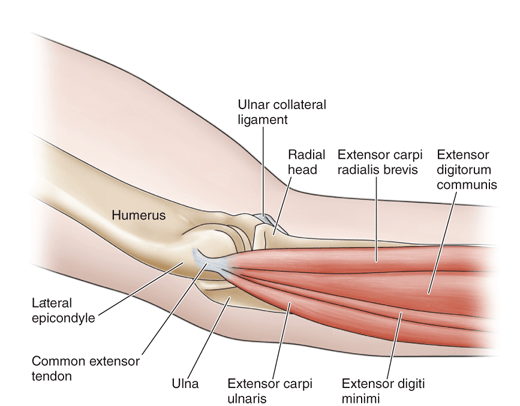
What causes Elbow ECRB tendinopathy (Tennis elbow)?
The most common cause of ECRB tendinopathy, also known as lateral epicondylitis or tennis elbow, is repetitive stress or overuse of the forearm muscles. This can be due to activities that involve gripping, twisting, or lifting with the hand and wrist, such as playing tennis, using a computer mouse, or performing manual labor. Poor technique during these activities can also contribute to the development of ECRB tendinopathy.

Signs and Symptoms
• Pain or tenderness on the outer part of the elbow
• Weakness in the forearm muscles
• Stiffness in the elbow joint
• Difficulty gripping or lifting objects, particularly with the affected arm
• Pain that worsens with certain activities, such as gripping or twisting
• Pain that radiates down the forearm
• In some cases, swelling or redness around the elbow
These symptoms usually develop gradually over time, but can also occur suddenly in response to a specific injury

Treatment of Elbow ECRB tendinopathy (Tennis elbow)?
Eccentric Strengthening Exercises - Eccentric exercises focus on strengthening the muscle while it lengthens. Eccentric strengthening exercises for the forearm muscles have been found to be effective in reducing pain and improving function in individuals with ECRB tendinopathy.
Soft Tissue Mobilization - Soft tissue mobilization techniques such as massage or instrument-assisted soft tissue mobilization can help reduce pain and improve tissue mobility. These techniques can also help increase blood flow to the affected area, which can promote healing.

Not sure whether this is what is going on?
The quickest way to find out is a free full body assessment, where a physiotherapist looks at how you actually move and tells you what is driving the problem.
Book a Free Full Body Assessment*Conditions apply, see the note below the form.
Prefer to ask a question first?
Tell us what is going on and one of our physiotherapists will call you back to talk through whether we can help.
*Please note only the Full Body Assessment is a FREE service. The Full Body Assessment is for new clients at MD Health or returning clients who haven’t been in for 6 months or longer who intend to participate in our 13 Week Clinical Pilates Program**. For all new clients who wish to come in for a one-off, casual or adhoc basis for Physiotherapy or Exercise Physiology the Initial Physiotherapy or Initial Exercise Physiology appointment is a paid service. ** The 13 Week Clinical Pilates Program at MD Health is not a lock in contract and you are not required to attend for the full 13 weeks if you do not wish.