
What is a Knee Meniscus Injury?
There are two menisci in the knee joint – the medial meniscus and the lateral meniscus. These menisci act as shock absorbers for forces through the knee joint, but also serve to increase the stability and congruence of the knee. Meniscus injuries are generally put into 3 categories: Irritations, Non-obstructive tears, and Obstructive tears.
What causes Meniscus irritation/tears?
Like any structure in the body, the menisci of the knee can deteriorate over time. Particularly in people over 40 years old, irritation of the menisci can occur as a result of overload, having the knee in an awkward position for a long period, or just as a normal result of ageing. Tears of the menisci generally occur as a result of a fast, uncontrolled twist of the knee, which puts abnormal forces through the menisci, causing tears of the fibres. Non-obstructive tears occur with fraying or general tearing of the edges of the meniscus, but the patient can still fully weight-bear through the knee, the joint doesn’t lock or give way, and the knee has full range of motion. Comparitively, Obstructive meniscal tears involve an inability to fully weight-bear, locking or giving way of the knee joint, and noticeable loss of range of motion of the knee. The medial meniscus of the knee is much more commonly injured than the lateral meniscus of the knee. It is very common for meniscus irritation to occur in people with knee osteoarthritis.


Signs and symptoms of meniscal injury/irritation?
• Medial or lateral knee pain, most commonly at the anterior aspect of the knee joint
• Pain worsens following moderate to intense activity, with pain/throbbing at night after these activities.
• Pain with twisting motions of the knee.
• Occasional referral of pain down aspects of the shin.
• For acute tears, significant pain and swelling on one side of the knee joint.

Treatment of knee of meniscal injury/irritation?
*Treatment for meniscus injuries varies, depending on the severity of injury*. - For meniscal Irritations and Non-obstructive tears, conservative management via exercise is the best, most evidence-based, and most proven way of returning to full function. For obstructive meniscal tears, a surgical opinion is often indicated, with an arthroscopy likely needed (followed by exercise-based rehab) to fully restore function in the knee.
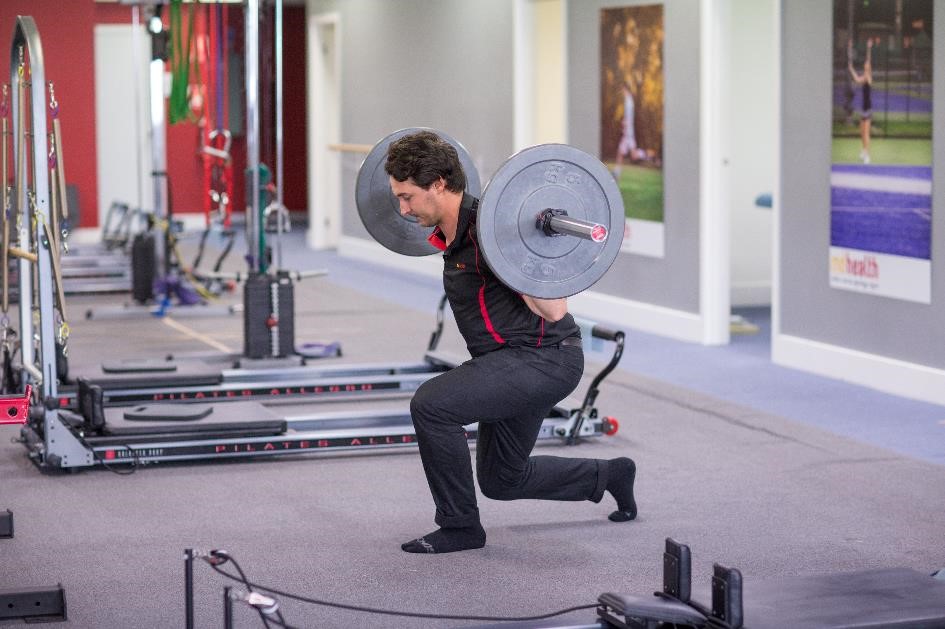
Tailored Clinical Exercise will help to strengthen the knee stabilising muscles that support and control the movement of your knees and help offload the pressures on the meniscus. This is the most important part of your meniscus rehab! This itself can often relieve pain and works best to reduce pain in the long-term. Other exercises strengthening the calves, hamstrings and deep hip musculature are also an important part of this process.
Referral – if your symptoms do not reduce after about 3 months of exercise-based rehab, our staff may choose to refer you to a knee surgeon to explore further options. *For non-obstructive tears, this timeframe may be longer!

Not sure whether this is what is going on?
The quickest way to find out is a free full body assessment, where a physiotherapist looks at how you actually move and tells you what is driving the problem.
Book a Free Full Body Assessment*Conditions apply, see the note below the form.
Prefer to ask a question first?
Tell us what is going on with your knee and one of our physiotherapists will call you back.
*Please note only the Full Body Assessment is a FREE service. The Full Body Assessment is for new clients at MD Health or returning clients who haven’t been in for 6 months or longer who intend to participate in our 13 Week Clinical Pilates Program**. For all new clients who wish to come in for a one-off, casual or adhoc basis for Physiotherapy or Exercise Physiology the Initial Physiotherapy or Initial Exercise Physiology appointment is a paid service. ** The 13 Week Clinical Pilates Program at MD Health is not a lock in contract and you are not required to attend for the full 13 weeks if you do not wish.