
Osteoporosis is one of the most common causes of fractures in older adults, particularly women after menopause. But why does osteoporosis increase your risk of fracture?
The answer is largely related to bone mineral density (BMD) and the changes that occur within the structure of your bones.
Understanding bone density is important because osteoporosis is not simply about having “weak bones”. It is a condition where the amount and quality of bone tissue decreases, making bones less able to withstand everyday forces.
What is bone mineral density?
Bone mineral density (BMD) refers to the amount of mineral, primarily calcium and phosphate, contained within your bones. These minerals provide much of the hardness and strength of bone. However, bone is much more than calcium.
Healthy bone is living tissue made up of minerals, collagen and specialised bone cells. Inside many bones is a honeycomb-like network called trabecular bone, surrounded by a stronger outer layer called cortical bone.

Your bones are constantly being remodelled. Cells called osteoclasts break down old bone, while osteoblasts build new bone. When you are younger, these processes are generally well balanced, allowing your bones to maintain or increase their strength.
As we age, bone breakdown can begin to exceed new bone formation.
What happens to bone density with osteoporosis?
The tiny supporting structures within trabecular bone can become thinner and less connected, while the outer cortical layer can also become thinner. This reduces the bone’s ability to tolerate mechanical loads.
Think of the internal structure of bone like a three-dimensional scaffold. If the supporting structures become thinner, fewer or more fragile, the entire structure becomes less capable of handling force.
This is why a person with osteoporosis may sustain a fracture from a relatively minor fall or, in severe cases, from everyday activities such as bending, lifting or twisting.
Bone density isn't the whole story
A DEXA scan is commonly used to measure bone mineral density and assess osteoporosis or osteopenia. The result is often reported as a T-score, which compares your bone density with that of a healthy young adult.
Generally, lower bone mineral density is associated with a higher risk of fracture. However, bone strength depends on more than BMD alone.

With osteoporosis, bone mineral density decreases and the internal structure of the bone can deteriorate.
The architecture of the bone, its geometry, rate of bone turnover and quality of the bone tissue all contribute to its ability to withstand force.
This is why improving bone health requires more than simply increasing calcium intake.
Can exercise improve bone density?
One of the most important forms of osteoporosis exercise is progressive resistance and weight-bearing training — including lifting weights.
When muscles contract and place mechanical load through bones, this provides a stimulus for the bone to adapt. Over time, appropriately prescribed resistance training can help maintain or improve bone strength, while also improving muscle strength, balance and physical function.
These are all important factors in reducing falls and fracture risk.
How MD Health can help
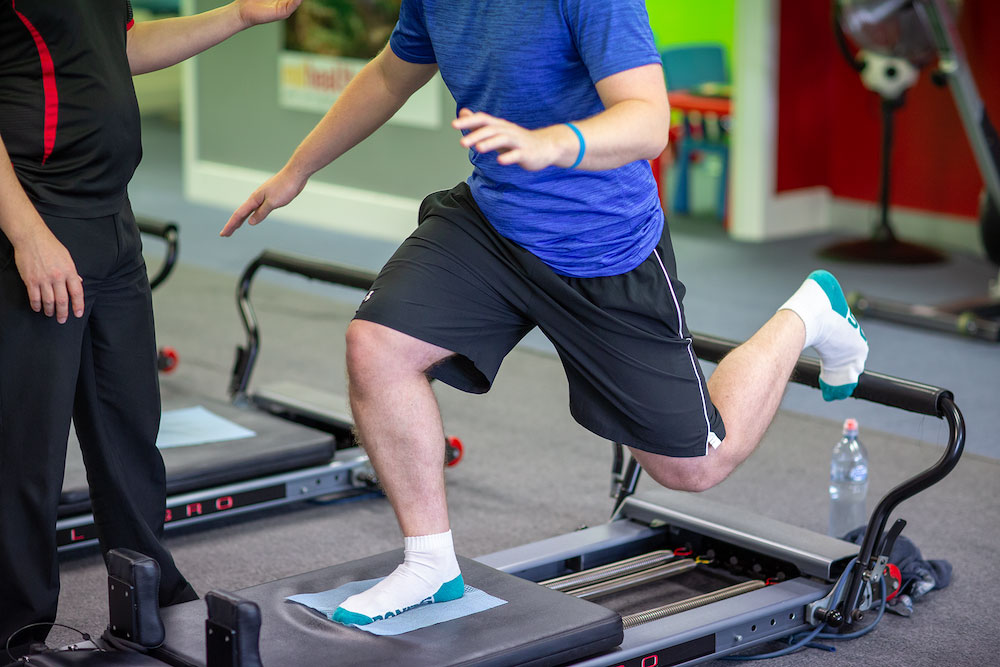
At MD Health, our approach to bone density training is progressive and individualised. For those who have never lifted weights before, we initially develop strength, stability and exercise tolerance through Clinical Pilates and controlled resistance training.
From there, we can progressively introduce higher-intensity resistance and weight-bearing exercise where appropriate.
For people with osteoporosis or osteopenia, the goal is not simply to “lift heavy”. It is to expose the bones to appropriate, progressive loading in a safe and structured way.
If you’re looking for osteoporosis physiotherapy, exercise physiology, bone density exercise or resistance training for osteoporosis, MD Health can help you develop a program designed around your current strength, exercise tolerance and bone health.
Frequently asked questions
Use the box below rather than typing questions as headings. It looks the same to a reader, and it also gives Google the question and answer markup that can win the answer box. Delete this grey line once you have read it.
Yes. Having osteoporosis does not mean you should stop exercising. In fact, appropriately prescribed resistance and weight-bearing exercise can help maintain or improve bone strength, while also improving muscle strength, balance and physical function.
For many people with osteoporosis, progressive resistance training can be safe and beneficial when it is appropriately prescribed. The key is not simply how much weight you lift, but choosing the right exercises, load and progression for your individual needs.
There isn't one exercise that is best for everyone with osteoporosis. A good program may include resistance training, weight-bearing exercise, balance work and exercises that improve strength and physical function. Your program should also take into account your fracture history, bone density, current strength and any other physical limitations. At MD Health, we assess these factors before deciding which exercises are right for you.
You don't need to be experienced with weights to start improving your strength. Your program can begin with exercises that match your current ability and gradually progress as you become stronger.
At MD Health, we may initially use Clinical Pilates and controlled resistance exercises to build strength, stability and exercise tolerance before progressing to heavier resistance where appropriate.
Exercise can help address several factors associated with fracture risk. Resistance training can support muscle and bone strength, while balance and functional training can help reduce the risk of falls.
Exercise is one part of managing osteoporosis, alongside medical care and other factors such as nutrition. Your program should be tailored to your individual fracture and fall risk.
Not sure whether this applies to you?
The quickest way to find out is a free full body assessment, where a physiotherapist looks at how you actually move and tells you what is driving the problem.
Book a Free Full Body Assessment*Conditions apply, see the note below the form.
Prefer to ask a question first?
Tell us what you are hoping to get out of it and one of our physiotherapists will call you back.
*Please note only the Full Body Assessment is a FREE service. The Full Body Assessment is for new clients at MD Health or returning clients who haven’t been in for 6 months or longer who intend to participate in our 13 Week Clinical Pilates Program**. For all new clients who wish to come in for a one-off, casual or adhoc basis for Physiotherapy or Exercise Physiology the Initial Physiotherapy or Initial Exercise Physiology appointment is a paid service. ** The 13 Week Clinical Pilates Program at MD Health is not a lock in contract and you are not required to attend for the full 13 weeks if you do not wish.