

Osteoporosis doesn't usually announce itself. Many people don't realise their bones have weakened until they experience a fracture, perhaps a wrist after a small trip or a hip after what seemed like a minor fall.
So, if you've just been told you have osteopenia or osteoporosis, one of the first questions you might have is: “Can I still exercise?”
Yes — absolutely.
But not all exercise affects your bones in the same way, so it's worth understanding which types of exercise can help and why.
Your bones are more active than you think
Bone isn't a fixed structure. It's constantly being broken down and rebuilt.
When you move and put load through your body, your bones receive a signal to adapt and stay strong. When you're inactive for long periods, that stimulus is reduced, which can contribute to bone loss over time.
That's one reason regular movement and exercise are so important for bone health.
We typically reach peak bone mass in our late twenties or early thirties. After that, the focus shifts towards maintaining as much bone strength as possible.
Age, hormones (particularly around menopause), muscle loss and lifestyle can all influence bone health. Men can also experience bone loss, particularly as they get older.
Osteopenia means your bone density is lower than the healthy range, while osteoporosis means bone density is lower still, increasing the risk of fractures.
In both cases, the answer isn't to stop moving. It's about finding the right type and level of exercise for you.

Not all exercise is equal for bone health
Bones respond to load.
Resistance training, weight-bearing exercise and certain types of impact provide a stronger stimulus for your bones to adapt and maintain or improve their strength.
Walking and stretching are still valuable for your overall health, but on their own, they may not provide enough stimulus to significantly improve bone density.
Where does clinical Pilates fit in?
Clinical Pilates can be particularly useful for:
- Building core and postural strength
- Improving balance and coordination
- Developing body awareness and movement control
- Improving flexibility
- Building confidence with movement
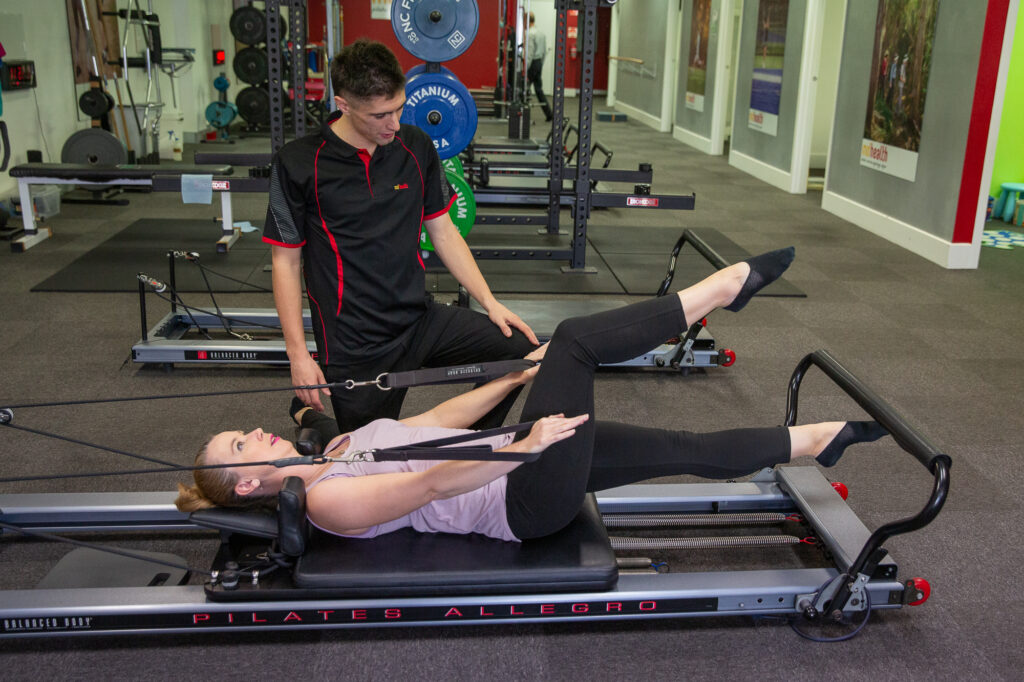
That balance and confidence can be especially important as we get older. Falls are a major cause of fractures, so improving strength, balance and movement control can help reduce your risk of falling.
However, Clinical Pilates on its own may not provide the heavier loading stimulus needed to significantly increase bone density.
That's where progressive strength training becomes important.
Strength training: a key part of building stronger bones
Progressive strength training is one of the most effective forms of exercise for improving bone strength.
This might involve dumbbells, resistance machines, barbells or other forms of resistance. As your muscles work against resistance, they place greater loads on your bones, providing a stimulus for them to adapt.
And you don't need to lift extremely heavy weights.
The key is that the exercise needs to be challenging enough for you, with the resistance gradually increased as your strength improves.
This is why strength training should be prescribed and progressed based on your individual ability, especially if you have osteoporosis, a history of fractures or other health considerations.

Clinical Pilates and strength training: why combine them?
Clinical Pilates and strength training aren't competing approaches. They can work together really well because they address different aspects of your physical health.
| Clinical Pilates | Strength Training | |
| Focus | Balance, posture, core strength, flexibility and movement control | Building muscle strength and providing greater load through the bones |
| Style | Controlled, targeted and often lower-load | Progressive resistance with increasing load |
| Great if you are | Building movement confidence, balance and control | Building stronger muscles and supporting bone health |
| Role in bone health | Supports strength, balance and fall prevention | Provides the loading stimulus needed to help improve bone strength |
Neither is necessarily “better”. They simply do different jobs.
That's why we combine Clinical Pilates with physiotherapy-led strength training. Pilates can help you develop the control, balance and confidence to move well, while strength training provides the progressive loading needed to build stronger muscles and support bone health.
Together, they can help you build a stronger foundation for everyday life.
It's never too late to start
Whatever your age, your body can still respond to exercise.
With the right programme, older adults can improve their strength, balance and confidence with movement. And while improving bone density is an important goal, the benefits go well beyond what's measured on a bone scan.
Being stronger and more confident can help you keep doing the things you enjoy — whether that's walking, gardening, travelling, playing with your grandchildren or simply feeling more capable in everyday life.
How we approach bone health at MD health
At MD Health, every client starts with a Full Body Assessment.
We look at your medical history, current abilities, joint movement, strength and balance. From there, we can develop an exercise programme that's appropriate for you and progress it safely as you get stronger.
Depending on your needs and goals, this may include a combination of Clinical Pilates and progressive strength training.
Our goal isn't simply to improve your bone density on paper. It's to help you build the strength, confidence and physical capacity to keep doing the things you love for as long as possible.
Frequently asked questions
Clinical Pilates can support strength, balance, posture and movement control, but Pilates alone may not provide enough loading to significantly improve bone density. For bone health, it can work well alongside progressive strength training, which provides a stronger stimulus for bones to adapt.
They serve different purposes. Clinical Pilates can help improve balance, posture, core strength and movement control, while progressive strength training provides the resistance and loading needed to support stronger bones. Combining both can provide a more complete approach to exercise and bone health.
There isn't one exercise that's best for everyone. Progressive resistance training and appropriate weight-bearing exercise are particularly important for bone health, while exercises that improve strength and balance can also help reduce the risk of falls. Your programme should be matched to your bone health, fitness, strength and fracture history.
In many cases, yes. People with osteoporosis can benefit from resistance training when exercises are appropriately selected, performed with good technique and progressed gradually. If you have osteoporosis or a history of fractures, it's important to have your programme individually assessed and prescribed.
Walking is excellent for general health and provides some weight-bearing activity, but walking alone may not provide enough loading to significantly increase bone density. Adding progressive strength training can provide a greater stimulus for maintaining and improving bone strength.
The answer depends on your individual bone health, fracture history and physical abilities. Some movements may need to be modified or avoided, particularly certain high-impact or heavily loaded movements. Rather than avoiding exercise altogether, it's important to understand which movements are appropriate for you and how they can be safely progressed.
Yes. Bone responds to mechanical loading throughout life, and older adults can still improve strength and physical capacity with appropriately prescribed exercise. While results vary between individuals, progressive resistance training can provide an important stimulus for maintaining and improving bone strength.
A good starting point is an individual assessment. At MD Health, a Full Body Assessment looks at your medical history, strength, joint movement, balance and current abilities before an exercise programme is developed. This allows your programme to be tailored to your needs and progressed as you get stronger.
Not sure whether this applies to you?
The quickest way to find out is a free full body assessment, where a physiotherapist looks at how you actually move and tells you what is driving the problem.
Book a Free Full Body Assessment*Conditions apply, see the note below the form.
Prefer to ask a question first?
Tell us what you are hoping to get out of it and one of our physiotherapists will call you back.
*Please note only the Full Body Assessment is a FREE service. The Full Body Assessment is for new clients at MD Health or returning clients who haven’t been in for 6 months or longer who intend to participate in our 13 Week Clinical Pilates Program**. For all new clients who wish to come in for a one-off, casual or adhoc basis for Physiotherapy or Exercise Physiology the Initial Physiotherapy or Initial Exercise Physiology appointment is a paid service. ** The 13 Week Clinical Pilates Program at MD Health is not a lock in contract and you are not required to attend for the full 13 weeks if you do not wish.


