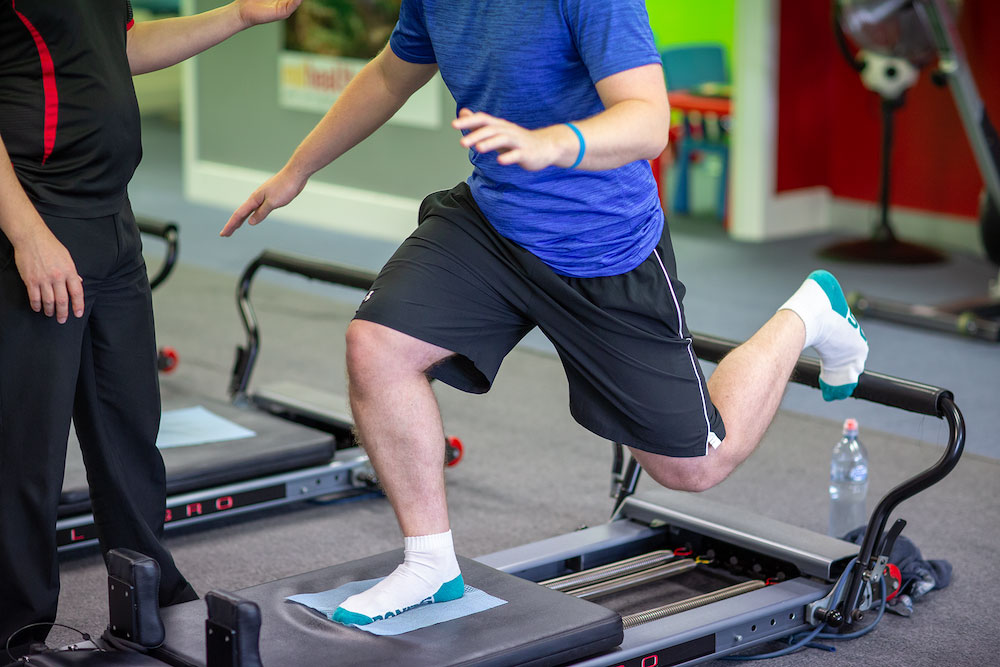

The Sacro-iliac joint, or SIJ, provides a stable base for the hip joints and lumbar spine to work and move from.
The strong muscles and ligaments of the SIJ work to stabilise our lumbo-pelvic girdle during all lower limb movements.
Listed below are some evidence-based FACTS about the SIJ:
- The pelvis and SIJ are designed for load transfer and are inherently STABLE. This means that the SIJ can transfer enormous loads under normal conditions
- Pelvic girdle pain disorders can be associated with excessive or insufficient muscle activation and lumbopelvic motor function
- Asymmetry of the movement of the pelvis on assessment is likely due to altered pelvic and trunk muscle activity, NOT positional changes of the SIJ itself
- The SIJ only moves about 2.5 degrees when non-weight bearing, and even less (0.2degrees) when weight bearing, therefore;
- The movement of the SIJ/pelvis cannot be accurately assessed via manual palpation/feel
- The claim by some health practitioners to treat SIJ ‘displacements’ or ‘misalignments’ is NOT evidence-based
- There is strong evidence to suggest that manipulations of the pelvic joints do NOT change the inherent positioning of the pelvis or SIJ
- Asymmetric SIJ laxity can occur in pregnant women, and is associated with to moderate to severe pelvic girdle pain during pregnancy
- The strongest predictor of pelvic girdle pain not becoming chronic after pregnancy is the BELIEF that it will not (believing it will get better!)
- The best indicator of an individuals’ pain originating from the pelvis is pain local to the attachment of the long dorsal ligament of the sacrum, potentially paired with the cluster of Laslett (pain provocation tests).
The bottom line is: The Sacro Iliac Joint is a stiff joint naturally! The most effective way of dealing with SIJ pain is to do exercises working on the co-ordinated activation of the muscles around the lumbopelvic area, NOT manual therapy or manipulation.
If you feel you have any pain caused from the SIJ, or if you are pregnant and want to have an active, pain-free pregnancy, our Physiotherapists and Exercise Physiologists at MD Health use the best current available evidence in the assessment, diagnosis and treatment of SIJ issues!
Want to know more?
If you want more information regarding this article or would like to book for a FREE full body assessment with one of our Physiotherapists or Exercise Physiologists, call us on 03 9857 0644 or email us at [email protected]

Source: @PhysioMeScience
Not sure whether this applies to you?
The quickest way to find out is a free full body assessment, where a physiotherapist looks at how you actually move and tells you what is driving the problem.
Book a Free Full Body Assessment*Conditions apply, see the note below the form.
Prefer to ask a question first?
Tell us what is going on and one of our physiotherapists will call you back to talk through whether we can help.
*Please note only the Full Body Assessment is a FREE service. The Full Body Assessment is for new clients at MD Health or returning clients who haven’t been in for 6 months or longer who intend to participate in our 13 Week Clinical Pilates Program**. For all new clients who wish to come in for a one-off, casual or adhoc basis for Physiotherapy or Exercise Physiology the Initial Physiotherapy or Initial Exercise Physiology appointment is a paid service. ** The 13 Week Clinical Pilates Program at MD Health is not a lock in contract and you are not required to attend for the full 13 weeks if you do not wish.